



PROTAC Linkers
PROTACs (Proteolysis Targeting Chimeric Molecules) are heterobifunctional protein degraders and promising targeted therapeutics candidates for cancer. The PROTAC linker connects two functional motifs of a PROTAC, a target protein binder and an E3 ligase recruiter.
The linker plays an important role in a PROTAC. The features of the linker (type, length, attachment position) can affect the formation of ligase:PROTAC:target ternary complex, resulting in influencing the efficient ubiquitination of the target protein and its ultimate degradation. The optimal lengths of the PROTAC linkers are reported varying from 12-carbon to over 20-carbon, and the commonly used linkers in the development of PROTACs are PEGs, Alkyl-Chain and Alkyl/ether.
PROTAC Linkers Isoform Specific Products
All Product Categories
-
PROTAC Linkers Related Products (4095)
Related Products (4095)

-
PROTAC Linkers Isoform Comparison
-
Cy5-PEG5-azide bromide
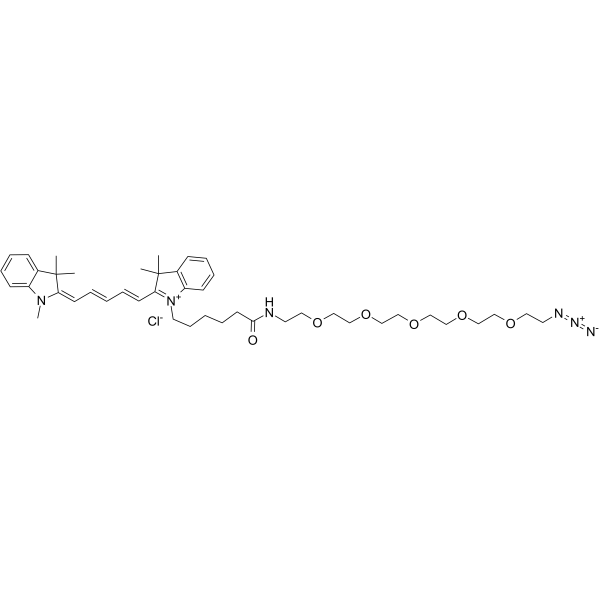 0 ImagesCat. No.: HY-141059Purity: 98.76%Cy5-PEG5-azide is a PEG-based PROTAC linker that can be used in the synthesis of PROTACs. Cy5-PEG5-azide is a click chemistry reagent, it contains an Azide group and can undergo copper-catalyzed azide-alkyne cycloaddition reaction (CuAAc) with molecules containing Alkyne groups. It can also undergo strain-promoted alkyne-azide cycloaddition (SPAAC) reactions with molecules containing DBCO or BCN groups.
-
Bis-PEG21-NHS ester
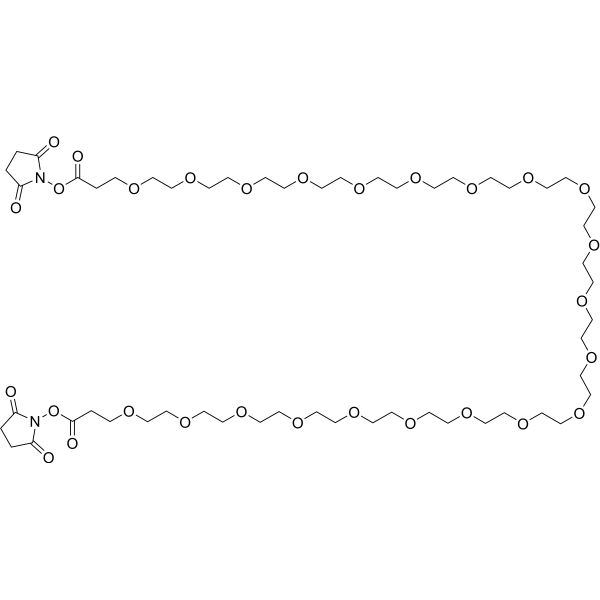 0 ImagesBis-PEG21-NHS ester is a PEG/Alkyl/ether-based PROTAC linker can be used in the synthesis of PROTACs. Bis-PEG21-NHS ester is a cleavable ADC linker used in the synthesis of antibody-drug conjugates (ADCs).
-
Biotin-PEG5-azide
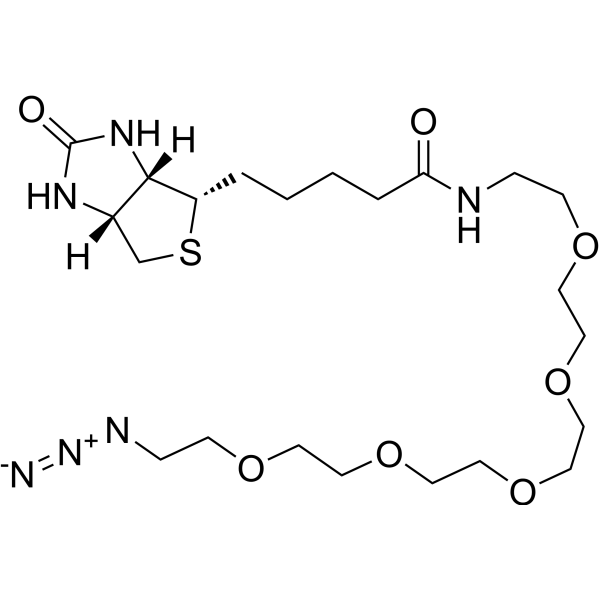 0 ImagesCat. No.: HY-133174CAS No.: 1163732-89-5Biotin-PEG5-azide is a PEG-based PROTAC linker can be used in the synthesis of PROTAC. Biotin-PEG5-azide is a click chemistry reagent, it contains an Azide group and can undergo copper-catalyzed azide-alkyne cycloaddition reaction (CuAAc) with molecules containing Alkyne groups. It can also undergo strain-promoted alkyne-azide cycloaddition (SPAAC) reactions with molecules containing DBCO or BCN groups.
-
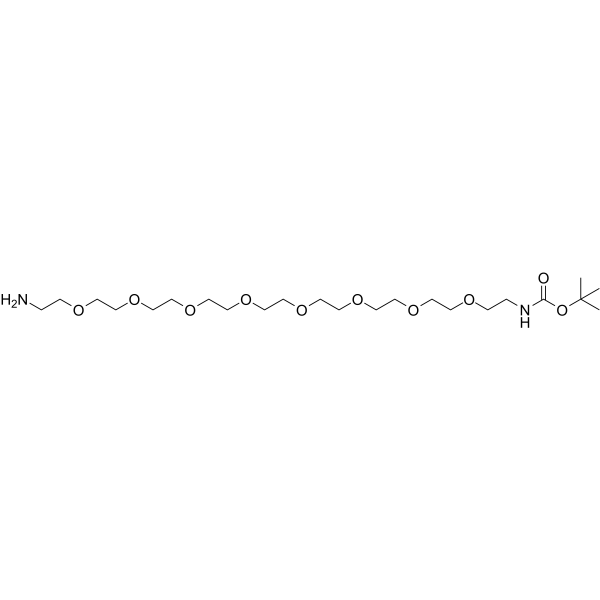
Boc-NH-PEG6-amine
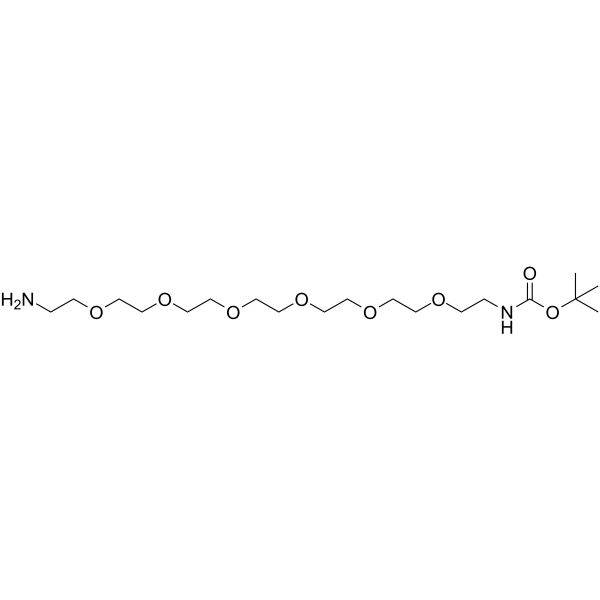 0 ImagesCat. No.: HY-140231CAS No.: 1091627-77-8
-
Bis-PEG6-NHS ester
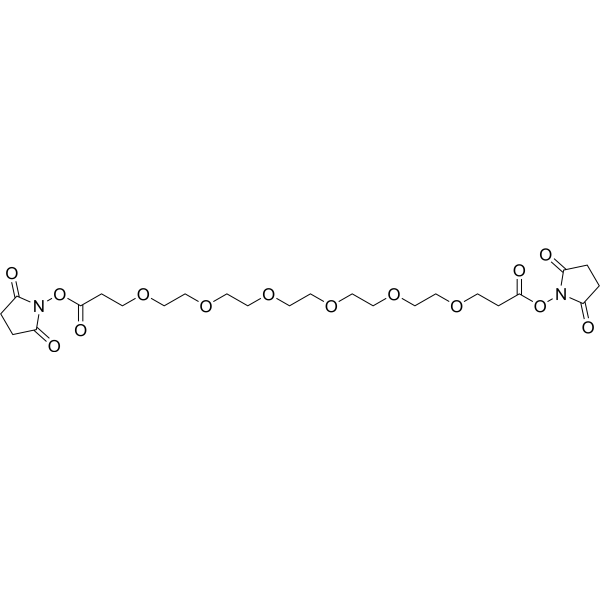 0 ImagesBis-PEG6-NHS ester is a PEG-based PROTAC linker can be used in the synthesis of PROTACs. Bis-PEG6-NHS ester is a cleavable ADC linker used in the synthesis of antibody-drug conjugates (ADCs).

![tert-Butyl 2-(hydroxymethyl)-7-azaspiro[3.5]nonane-7-carboxylate](https://file.medchemexpress.com/product_pic/hy-w056604.gif "Click to View tert-Butyl 2-(hydroxymethyl)-7-azaspiro[3.5]nonane-7-carboxylate Product Detail")
![3-Chlorobicyclo[1.1.1]pentan-1-amine hydrochloride](https://file.medchemexpress.com/product_pic/hy-w125351.gif "Click to View 3-Chlorobicyclo[1.1.1]pentan-1-amine hydrochloride Product Detail")
-
(3-Bromopropoxy)(tert-butyl)dimethylsilane
 0 ImagesCat. No.: HY-42425CAS No.: 89031-84-5
-
1-(2-N-Boc-aminoethyl)piperazine
 0 ImagesCat. No.: HY-W002960CAS No.: 140447-78-5
-
2-(tert-Butoxycarbonyl)-2-azaspiro[3.3]heptane-6-carboxylic acid
![2-(tert-Butoxycarbonyl)-2-azaspiro[3.3]heptane-6-carboxylic acid](https://file.medchemexpress.com/product_pic/hy-21123.gif "Click to View 2-(tert-Butoxycarbonyl)-2-azaspiro[3.3]heptane-6-carboxylic acid Product Detail") 0 ImagesCat. No.: HY-21123CAS No.: 1211526-53-2
0 ImagesCat. No.: HY-21123CAS No.: 1211526-53-2
-
6-Iodohex-1-yne
 0 ImagesCat. No.: HY-W035970CAS No.: 2468-56-6
-
6-Heptyn-1-ol
 0 ImagesCat. No.: HY-W007441CAS No.: 63478-76-2
-
4-Bromobutan-1-amine hydrobromide
 0 ImagesCat. No.: HY-W005399CAS No.: 24566-81-2
-
tert-Butyl 2-(piperidin-4-yl)acetate
 0 ImagesCat. No.: HY-W067830CAS No.: 180182-07-4
-
Pentaethylene glycol di(p-toluenesulfonate)
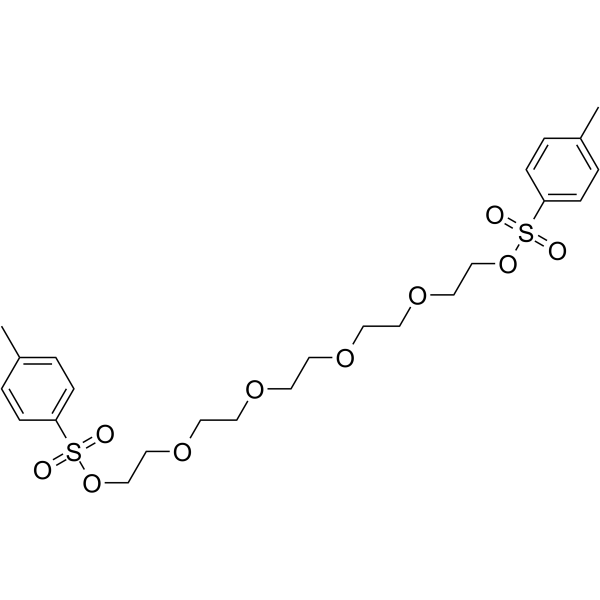 0 ImagesSynonyms: Penta(ethylene glycol) bis(p-toluenesulfonate); Bis-Tos-PEG5



